
Gout Infusion Therapy
Optimum Infusion provides provider-directed specialty infusion therapy for patients struggling with gout in a private, comfortable clinical setting with careful clinical monitoring throughout treatment.
Caring for People with Gout
Gout can be sudden, painful, and hard to plan around. Attacks may come without warning and can make daily life difficult. If you have reached the point of infusion therapy, we want to make the next step clear, comfortable, and efficient.
At Optimum Infusion, patients receive care from a dedicated clinical team focused on attentive, coordinated infusion support in a comfortable setting.
What is Gout?
Gout is a form of inflammatory arthritis that develops when uric acid builds up in your bloodstream and forms sharp, needle-like crystals in your joints. The most common site is the joint at the base of the big toe, though other joints (ankles, knees, fingers, wrists, and elbows) can also be affected. Gout attacks come on suddenly, often overnight, with peak pain and swelling typically reached within 6 to 24 hours.
Without adequate treatment, gout can progress from occasional flares to a chronic condition involving persistent joint damage, reduced mobility, and tophi — visible deposits of urate crystals that form in soft tissue around joints, in the ears, around the elbows, in the finger pulps, or along the Achilles tendon.
Causes & Risk Factors
- High-purine diet (red meat, organ meats, shellfish, beer and other alcohol, fructose-sweetened beverages)
- Obesity and metabolic syndrome
- Kidney disease or reduced kidney function — the most common reason uric acid builds up
- Family history of gout
- Age and sex — more common in men ages 30–50; risk rises in women after menopause
Common Symptoms
- Sudden, severe joint pain — often starting in the big toe
- Swelling, warmth, and redness around the affected joint
- Tenderness so intense that even a bedsheet can feel painful
- Lingering discomfort and stiffness between flares
- Limited range of motion in affected joints
Diagnosis
- Evaluation by a physician
- Joint fluid analysis to identify urate crystals under a microscope, the most definitive test
- Blood tests to measure uric acid levels
- X-ray, ultrasound, or dual-energy CT scan to assess joint damage or detect crystal deposits
Treatment Approaches
- Dietary and lifestyle modification to reduce purine intake and manage triggers
- NSAIDs, colchicine, or corticosteroids for acute flare management
- Urate-lowering therapy (ULT)
- Biologic therapy for chronic refractory gout that hasn’t responded to standard treatment
Comfort designed around you
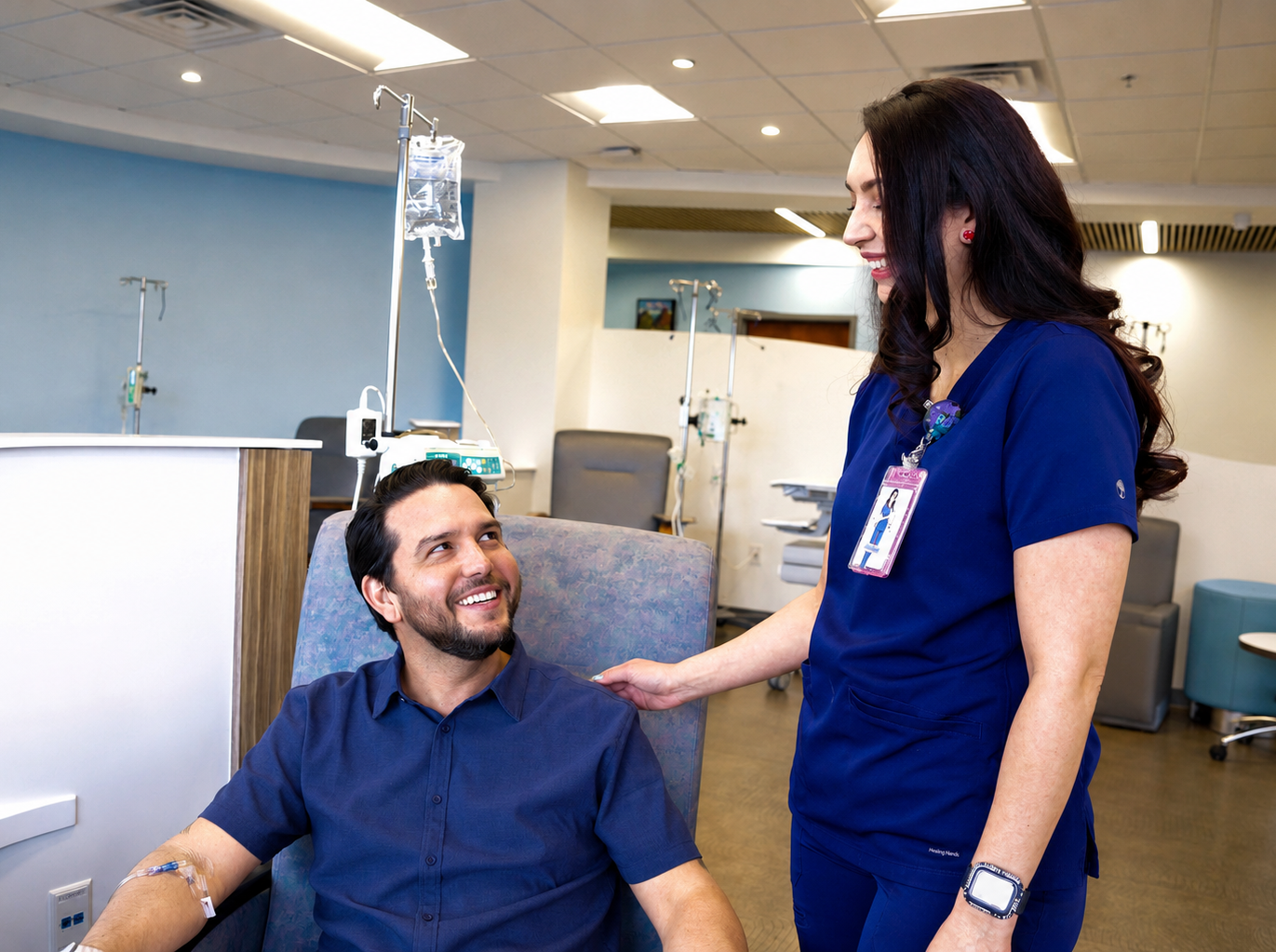
Our infusion center is designed to provide a calm, welcoming experience with comfortable seating, privacy dividers, and personal attention throughout your visit.
Clinical care you can trust
Infusions are administered under your provider’s orders, with experienced nurses monitoring your care throughout treatment.
Timely access to care
Once we receive your referral, our team works quickly to begin the intake and insurance process and coordinate your care.
Benefits of Infusion Therapy for Gout
Treatment that targets inflammation
Many biologic therapies are designed to target specific parts of the immune system involved in Gout. This focused approach may help address inflammation while avoiding broader effects on the body.
An option when other treatments have not helped
For some people, standard treatments do not provide enough relief. Infusion therapy may offer another option to help manage symptoms and support long-term disease control.
Care with ongoing monitoring
Your infusion is given by experienced nurses under your provider’s orders and established clinical protocols. If monitoring is needed, your care team is there to watch you closely and provide support during treatment.
Connected care with your physician
After each visit, clinical notes are shared with your provider. This helps keep your treatment plan organized and supports communication between your care teams.
Gout Therapies at Optimum Infusion
Our team administers the following IV biologic therapies for Gout. Your physician determines which therapy is appropriate for your diagnosis and disease history. Optimum Infusion administers the treatment as ordered.
Krystexxa
- Gout
Learn more

Submitting A Referral Is Straight Forward
Once we receive the required order and supporting documentation, our team starts the intake process and insurance verification as quickly as possible. We work closely with referring providers to coordinate treatment and keep communication clear throughout the process.
Your Experience At Optimum Infusion
Whether this is your first infusion or you’re transferring your care to us, here’s what your experience will look like.
A Comfortable, Relaxing Environment
Your infusion takes place in a thoughtfully designed setting with comfortable seating and privacy dividers that help create a calm, personal space. Whether you’d like to read, stream a show, work, or simply relax, our goal is to make your time with us as comfortable as possible. A guest is welcome to join you during your visit.
Attentive Care from Start to Finish
A registered nurse monitors you throughout your infusion according to medication-specific protocols and your provider’s orders. Vital signs are checked when appropriate, and our team remains available during your visit. If you have had infusion reactions in the past, please let us know before your appointment.
Know What to Expect
Infusion times vary depending on the medication and dose. Some visits may last several hours. Before your appointment, our team will provide an estimated treatment time so you can plan your day with confidence.
Helpful Resources
- FitzGerald JD, Dalbeth N, Mikuls T, et al. 2020 American College of Rheumatology Guideline for the Management of Gout. Arthritis Care & Research. 2020;72(6):744–760. https://rheumatology.org/press-releases/acr-releases-gout-management-guideline-with-emphasis-on-treat-to-target-strategy-for-urate-lowering-therapy
- Ragab G, Elshahaly M, Bardin T. Gout: An Old Disease in New Perspective — A Review. StatPearls / NCBI Bookshelf. https://www.ncbi.nlm.nih.gov/books/NBK546606/
- Chhana A, Lee G, Dalbeth N. Tophi and Pathophysiology of Gout. National Institutes of Health (PMC). https://pmc.ncbi.nlm.nih.gov/articles/PMC10929543/
This information is for general education and isn’t medical advice. Your prescribing provider decides whether a therapy is right for you. If you have questions about your treatment, talk with your provider.