
Ulcerative Colitis Infusion Therapy
Optimum Infusion provides clinically supervised, specialty infusion therapy, for patients living with Ulcerative Colitis, in a private, comfortable setting with careful monitoring throughout treatment.
Caring for People with Ulcerative Colitis
Ulcerative colitis can be hard to plan around. Flares may bring urgency, pain, and fatigue that interrupt daily life. If you have reached the point of infusion therapy, we want the next step to feel clear, comfortable, and well coordinated.
At Optimum Infusion, patients receive care from a dedicated clinical team focused on attentive, coordinated infusion support in a comfortable setting.
What is Ulcerative Colitis?
Ulcerative colitis (UC) is a chronic inflammatory bowel disease (IBD) that affects the inner lining of your colon and rectum, causing inflammation and ulcers in the digestive tract. UC is continuous and limited to the colon and rectum, which is an important distinction from Crohn’s disease.
UC is a lifelong condition with a flare-and-remission pattern. It most often first appears in young adults between ages 15 and 30, with a second smaller peak in onset between 50 and 70. Severity ranges from mild and well-controlled to severe and disabling.
Causes & Risk Factors
- Family history of IBD, especially first-degree relatives
- Autoimmune dysfunction
- Age. Distribution peaks at 15–30 and 50–70
- Ashkenazi Jewish ancestry, and a higher prevalence in people of European descent
- Environmental factors such as diet, stress, and lifestyle don’t cause UC but can trigger or worsen flares
Common Symptoms
- Abdominal pain and cramping, often in the lower abdomen
- Frequent diarrhea, often with blood, mucus, or pus
- Rectal bleeding
- Urgent, hard-to-delay need to have a bowel movement
- Tenesmus, a feeling of incomplete evacuation
- Fatigue, sometimes linked to anemia from chronic blood loss
- Unintentional weight loss and reduced appetite
- Low-grade fever during active flares
- Extraintestinal symptoms in some patients — eye inflammation, joint pain, skin lesions, liver involvement
Diagnosis
- Evaluation by a physician
- Colonoscopy with biopsy, the primary diagnostic tool, allowing direct visualization of the colon lining and confirmation through tissue sampling
- Blood tests to identify inflammation, anemia, and rule out infection
- Stool tests including fecal calprotectin to detect intestinal inflammation and exclude infectious causes
- CT or MRI imaging to assess extent of inflammation and monitor for complications
Treatment Approaches
- Aminosalicylates, the mainstay for mild-to-moderate disease
- Corticosteroids for short-term flare management
- Immunomodulators to reduce overall immune activity
- Biologic therapies targeting specific immune pathways
- JAK inhibitors for moderate-to-severe disease that hasn’t responded to other treatments
- Surgery (proctocolectomy) in severe or unresponsive cases
Comfort designed around you
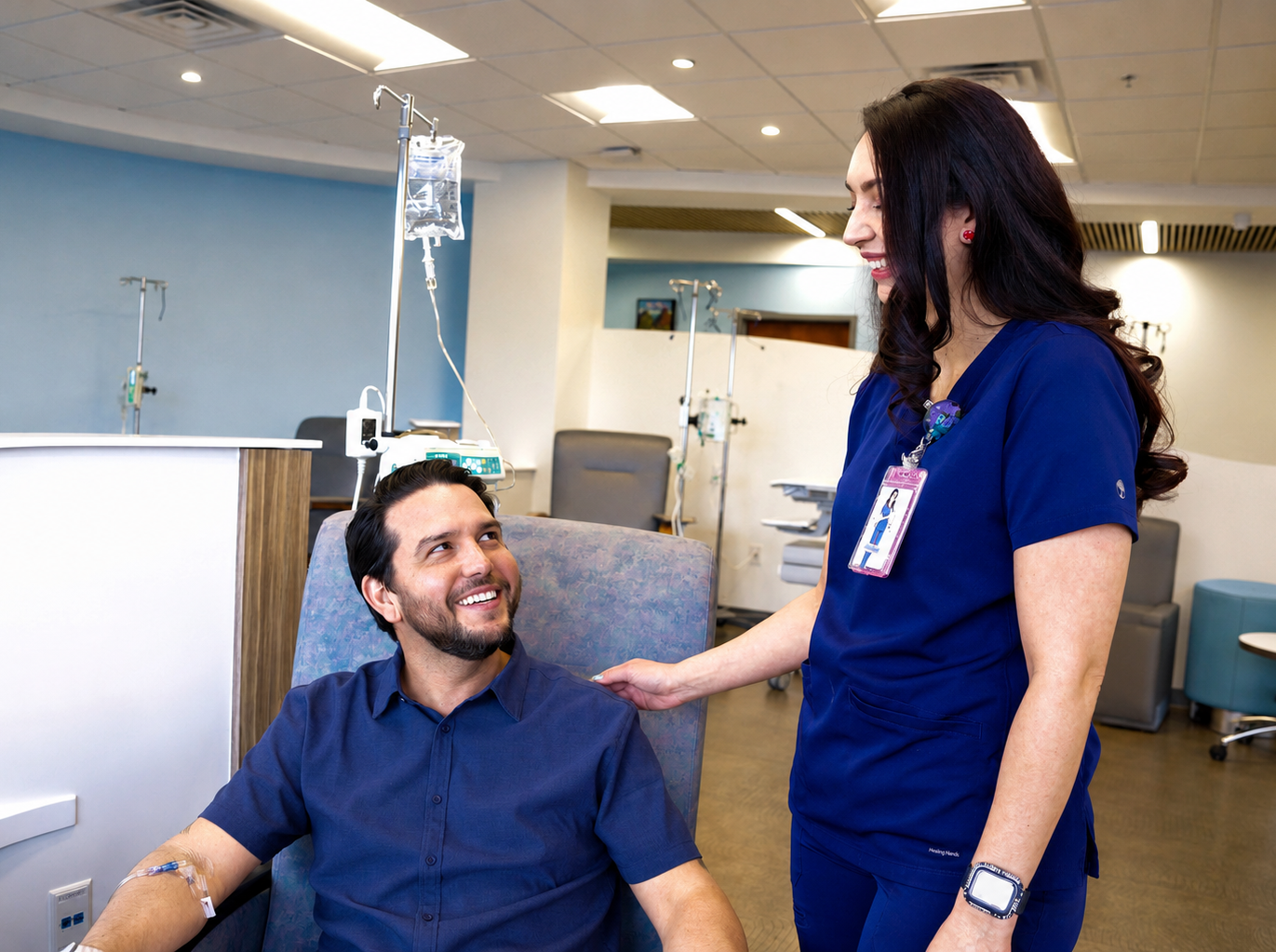
Our infusion center is designed to provide a calm, welcoming experience with comfortable seating, privacy dividers, and personal attention throughout your visit.
Clinical care you can trust
Infusions are administered under your provider’s orders, with experienced nurses monitoring your care throughout treatment.
Timely access to care
Once we receive your referral, our team works quickly to begin the intake and insurance process and coordinate your care.
Benefits of Infusion Therapy for Ulcerative Colitis
Treatment that targets inflammation
Many biologic therapies are designed to target specific parts of the immune system involved in Ulcerative Colitis. This focused approach may help address inflammation while avoiding broader effects on the body.
An option when other treatments have not helped
For some people, standard treatments do not provide enough relief. Infusion therapy may offer another option to help manage symptoms and support long-term disease control.
Care with ongoing monitoring
Your infusion is given by experienced nurses under your provider’s orders and established clinical protocols. If monitoring is needed, your care team is there to watch you closely and provide support during treatment.
Connected care with your physician
After each visit, clinical notes are shared with your provider. This helps keep your treatment plan organized and supports communication between your care teams.
Ulcerative Colitis Therapies at Optimum Infusion
Our team administers the following IV biologic therapies for UC. Your physician determines which therapy is appropriate for your diagnosis and disease history. Optimum Infusion administers the treatment as ordered.
Entyvio
- Crohn’s Disease
- Ulcerative Colitis
Learn more
Infliximab
- Crohn’s Disease
- Psoriatic Arthritis
- Rheumatoid Arthritis
- Ulcerative Colitis
Learn more
Skyrizi
- Crohn’s Disease
- Ulcerative Colitis
Learn more
Stelara
- Crohn’s Disease
- Ulcerative Colitis
Learn more
Tremfya
- Ulcerative Colitis
Learn more

Submitting A Referral Is Straight Forward
Once we receive the required order and supporting documentation, our team starts the intake process and insurance verification as quickly as possible. We work closely with referring providers to coordinate treatment and keep communication clear throughout the process.
Your Experience At Optimum Infusion
Whether this is your first infusion or you’re transferring your care to us, here’s what your experience will look like.
A Comfortable, Relaxing Environment
Your infusion takes place in a thoughtfully designed setting with comfortable seating and privacy dividers that help create a calm, personal space. Whether you’d like to read, stream a show, work, or simply relax, our goal is to make your time with us as comfortable as possible. A guest is welcome to join you during your visit.
Attentive Care from Start to Finish
A registered nurse monitors you throughout your infusion according to medication-specific protocols and your provider’s orders. Vital signs are checked when appropriate, and our team remains available during your visit. If you have had infusion reactions in the past, please let us know before your appointment.
Know What to Expect
Infusion times vary depending on the medication and dose. Some visits may last several hours. Before your appointment, our team will provide an estimated treatment time so you can plan your day with confidence.
Helpful Resources
- Mayo Clinic. Ulcerative Colitis — Symptoms and Causes. https://www.mayoclinic.org/diseases-conditions/ulcerative-colitis/symptoms-causes/syc-20353326
- Crohn’s & Colitis Foundation. About Ulcerative Colitis. https://www.crohnscolitisfoundation.org/what-is-ulcerative-colitis
- U.S. Food and Drug Administration. Skyrizi (risankizumab-rzaa) Prescribing Information. https://www.rxabbvie.com/pdf/skyrizi_pi.pdf
- Adams SM, Bornemann PH. Ulcerative Colitis. American Family Physician (via Mayo Clinic Proceedings review). https://www.mayoclinicproceedings.org/article/S0025-6196(14)00626-0/fulltext
- National Institute of Diabetes and Digestive and Kidney Diseases (NIDDK), NIH. Ulcerative Colitis. https://www.niddk.nih.gov/health-information/digestive-diseases/ulcerative-colitis
This information is for general education and isn’t medical advice. Your prescribing provider decides whether a therapy is right for you. If you have questions about your treatment, talk with your provider.